Black Swan
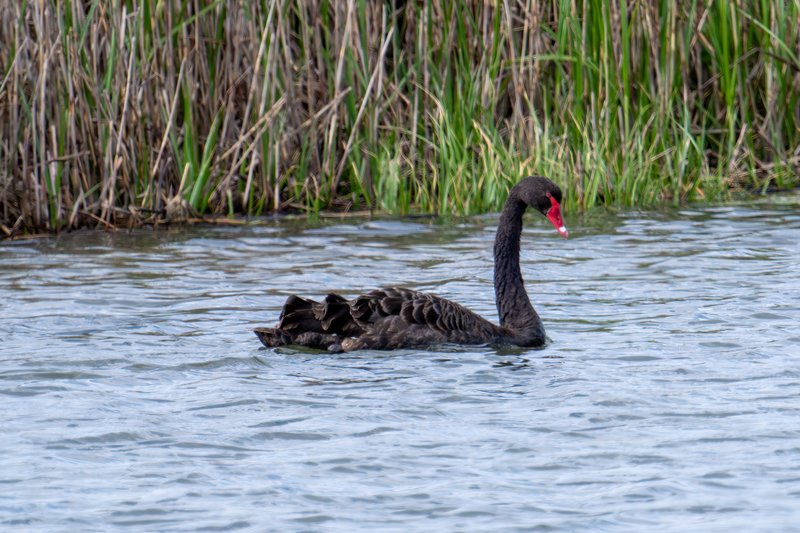
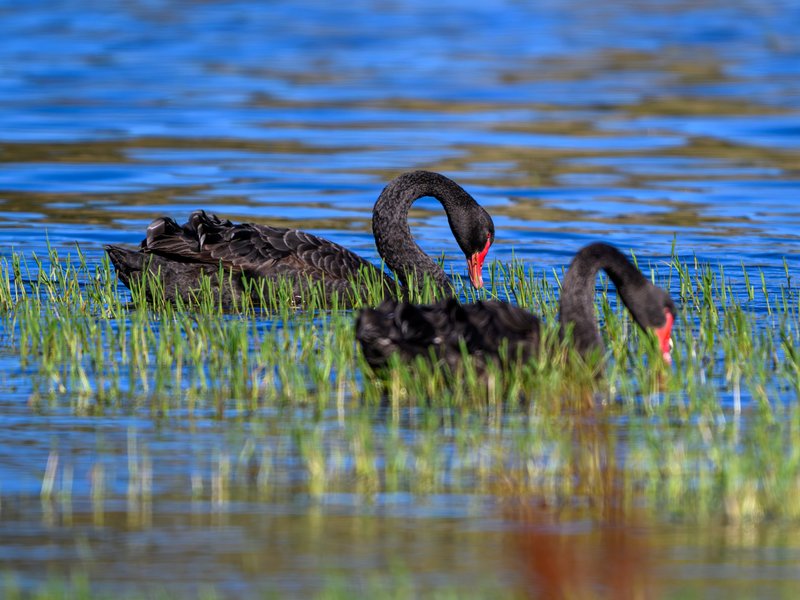
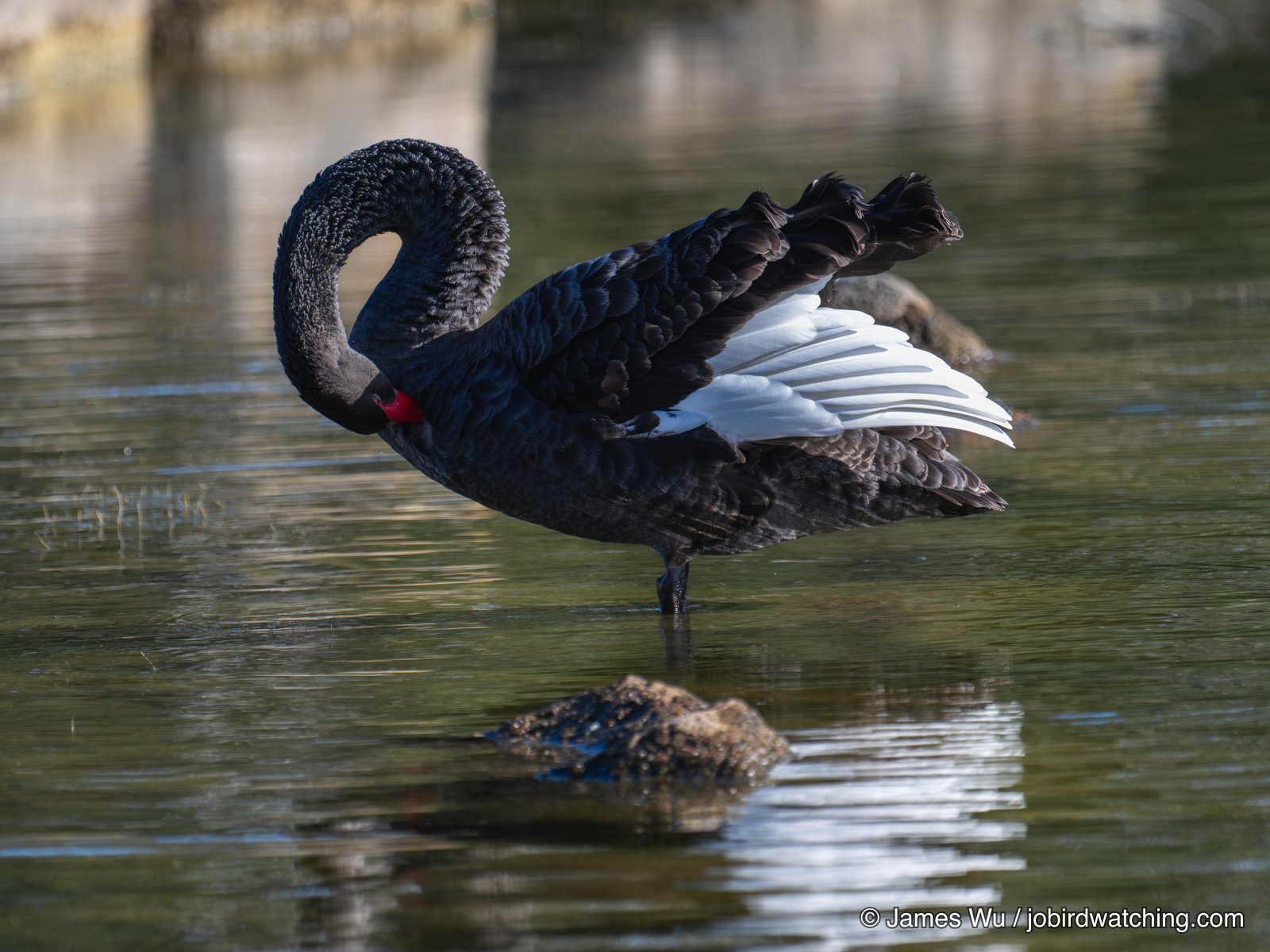
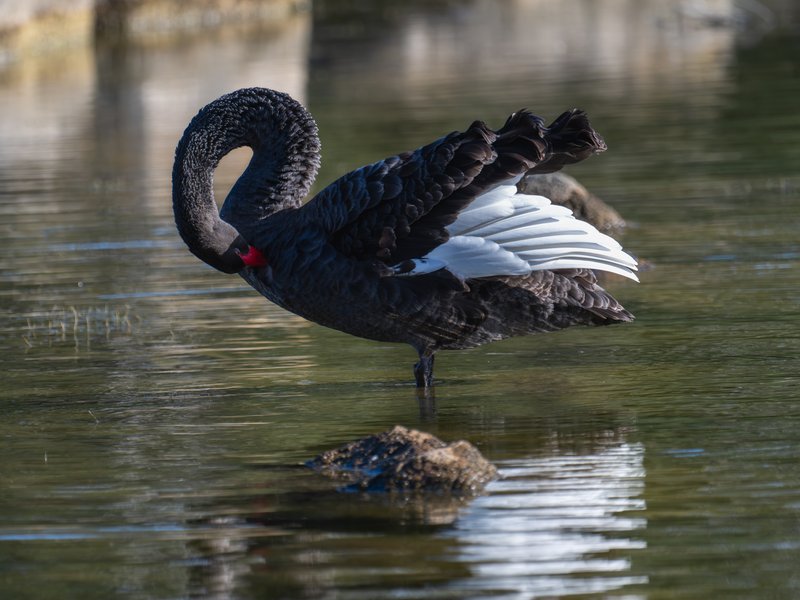
(英文名:Black Swan,学名:Cygnus atratus),是雁形目鸭科天鹅属的鸟类。原产于澳大利亚东南部和西南部地区,以及新西兰的北岛、南岛、斯图尔特岛和查塔姆群岛。以其几乎全黑的羽毛和红色的喙闻名,是澳大利亚和新西兰的象征性物种之一。
Black Swan
1-1.4 m; span 1.6-2 m. Male larger. World's only mostly black swan; white flight feathers conspicuous in flight, often visible at rest. Male: bill and neck longer and straighter. Immature: dull grey-brown with pale edges to feathers; flight feathers dingy white, tipped black. Singles to companies of thousands. Becomes flightless during post-breeding moult, when many thousands gather on secure waters: e.g. L. George (NSW), Moulting Lagoon (Tas.) and Coorong (SA). Travelling birds frequently heard overhead at night.
CORNER COUNTRY On the 900 km journey by road and track from Brisbane west to Cunnamulla, and beyond to Quilpie, Windorah and Birdsville, it is possible to see some outstanding outback specialties in some splendid country. Letter-winged Kite is the only raptor that can feed at night and the corner country is near the centre of its normal range. It's population fluctuates and increases during periodic eruptions of its primary prey, the endemic Long-haired Rat. Inland Dotterel, Crimson Chat and Orange Chat, Hall's Babbler and two quail-thrushes are just some of the other regional specialties to look out for. Much of this area is comprised of Mitchell Grass plains and mulga shrubland and a series of seasonally flooded wetlands which can teem with birdlife in good seasons. Some parts of this route, especially west of Windorah, are very rough, so a 4WD is recommended, especially for people intending to tackle the Birdsville Track from the north. It would also be wise not to attempt this journey during the intense heat of summer (Oct-Apr). On areas of black soil plain as little as 10 mm of rain will make unsealed roads impassable.
Localised Australian endemics Grey Grasswren, Eyrean Grasswren, Hall's Babbler.
Other key Australian Endemics Letter-winged Kite, Black Falcon, Spinifex Pigeon, Flock Bronzewing, Bourke's Parrot, Inland Dotterel, White-browed Treecreeper, Spotted Bowerbird, White-winged Fairywren, Variegated Fairywren, Crimson Chat, Orange Chat, Gibberbird, Chestnut-crowned Babbler, Crested Bellbird, Chirruping Wedgebill, Chestnut-breasted Quail-Thrush (castaneothorax race), Cinnamon Quail-Thrush, Apostlebird, Little Crow, Masked Woodswallow, Ground Cuckooshrike, Plum-headed Finch, Brown Songlark.
Others Spotted Harrier, Brolga, Australian Bustard, Australian Pratincole, Australian Owlet-nightjar, Grey-headed Honeyeater Grey-crowned Babbler.
- Voice
- musical bugle with a break, uttered on water or in flight; softer crooning notes.
- Habitat
- large open waters, fresh, brackish and salt; flooded pastures, green crops, tidal mudflats. Prefers larger permanent swamps and lakes with emergent and sub-aquatic vegetation; ornamental town lakes; sheltered estuaries and bays; occasionally open sea.
- Breeding
- April-Oct. in s.; March-May in ne. Q; but any month after suitable rains.
- Nest
- large heap; of reeds, grasses, aquatic plants, 1-1.5 m in diameter; in shallow water, on islands; occasionally in colonies.
- Eggs
- 4-6 or more; greenish white.
- Range & Status
- widespread and common in s. and e. Aust., Tas. and s. WA. Apparently extending breeding range into inland and Top End (NT); casual C. York Pen.; Gulf coast (Q); w. deserts (NT and WA). Sedentary; nomadic and dispersive. Introduced NZ and elsewhere; vagrant PNG.