Gouldian Finch
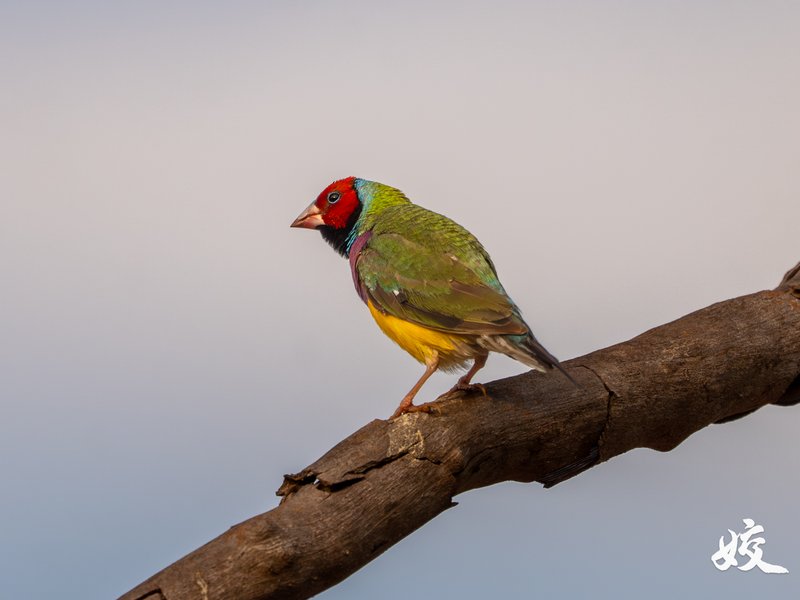
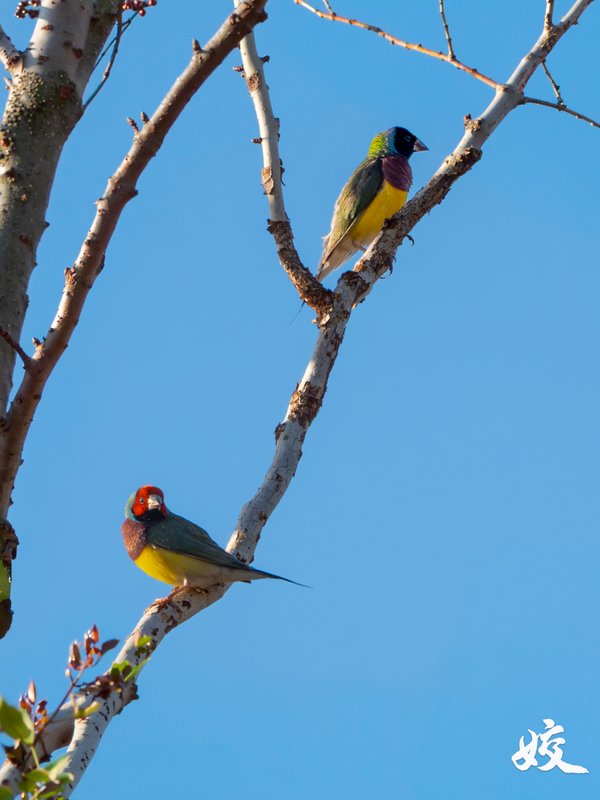
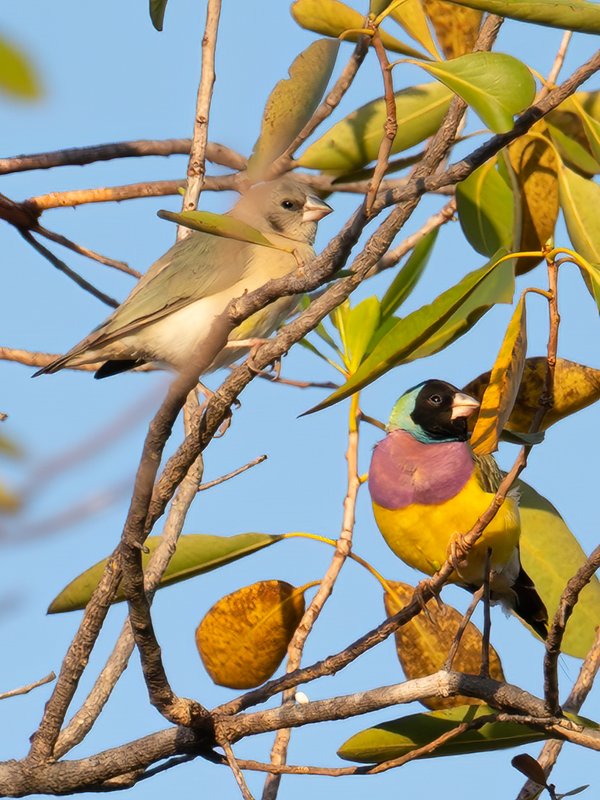
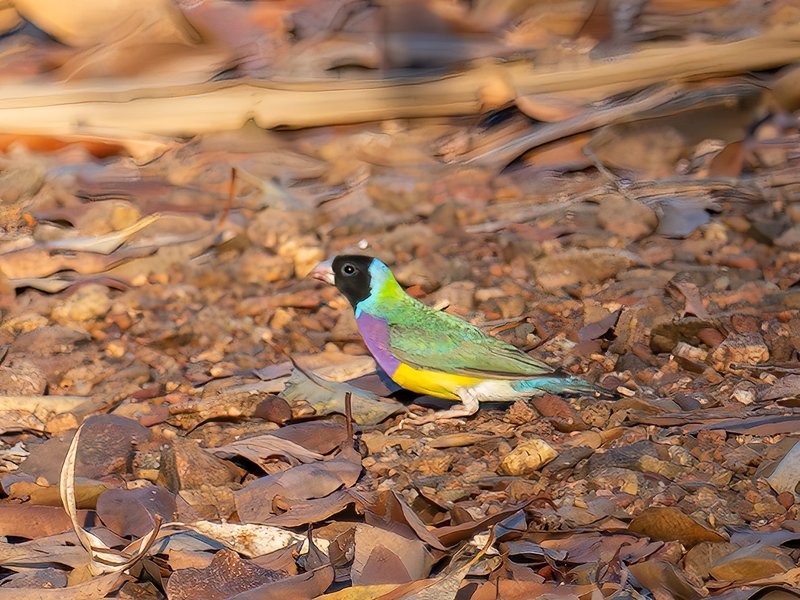
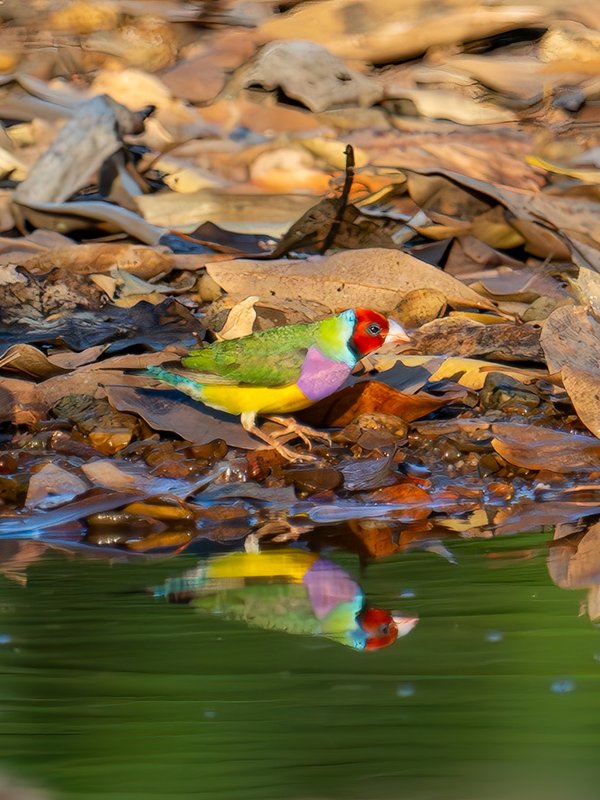
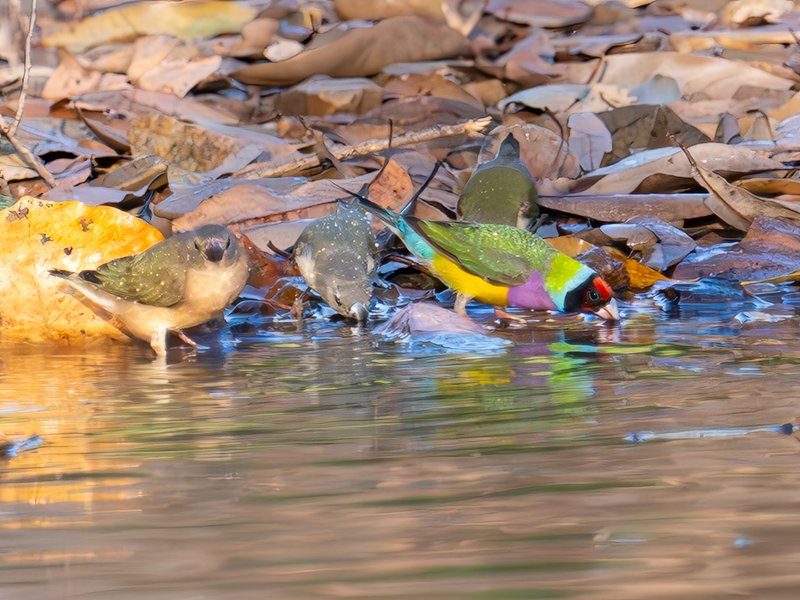
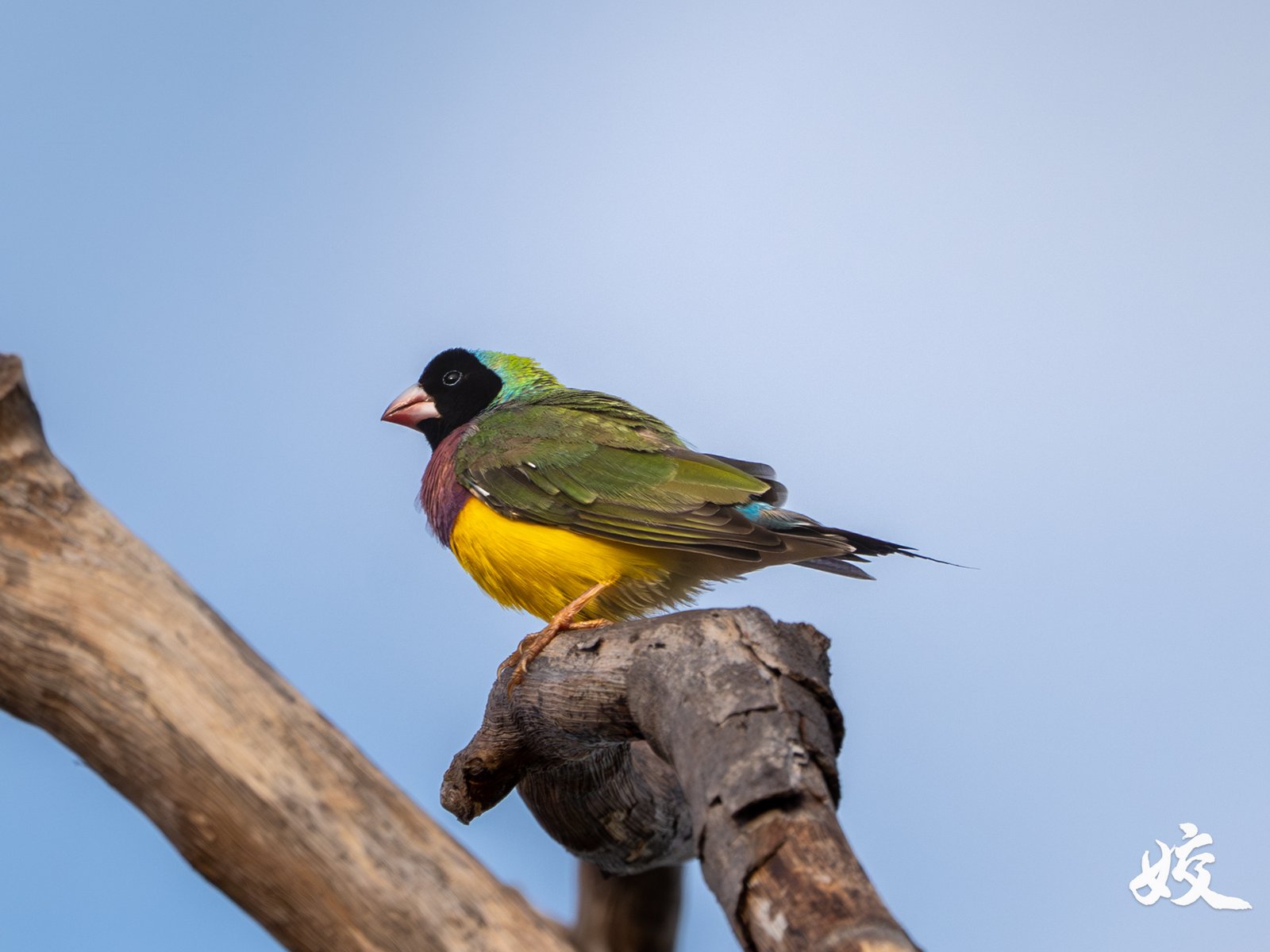
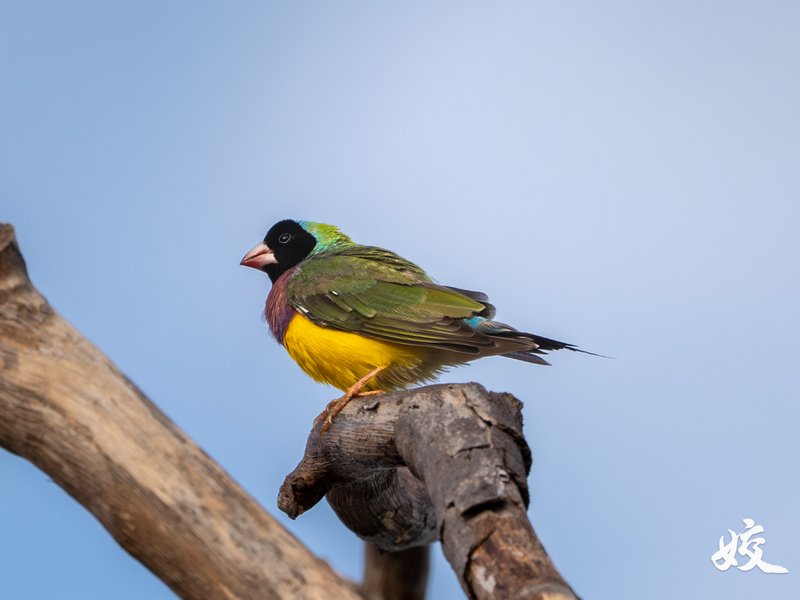
英文名:Gouldian Finch(学名:Chloebia gouldiae),是雀形目梅花雀科的鸟类。13-14厘米。在整个分布区内均为多色型——大多数为黑头型,约四分之一为红头型;少数为金头型。黑头型,雄鸟:喙偏白,尖端粉红;头部黑色,具纤细淡蓝色边缘;胸部紫色;下体黄色/白色;腰部天蓝色;尾黑色,末端延伸出两根纤细的长尾尖。雌鸟:较暗淡,胸部较浅。幼鸟:喙上方发黑下方浅色;头部发灰;向绿橄榄色背部/双翼/尾羽过渡;下体浅灰褐色;腿暗粉色。红头型,雄鸟:头部鲜艳猩红色;下颏/喉部黑色。雌鸟:较暗淡。金头型,雄鸟:头部浓郁赭黄色;下颏黑色。雌鸟:较暗淡。繁殖季成对或小群;非繁殖季成群达30只以上(昔日达数千只)。日光浴,在一天中最热时活跃;在结籽草丛中觅食,尤其是本土蜀黍属(Sorghum spp.);受惊飞往附近树木。傍晚集结觅食、沐浴。
Gouldian Finch
13-14 cm. Polymorphic throughout range - most are black-headed, but about a quarter are red-headed; a few have golden heads. Black-headed, male: bill whitish, tipped pink; head black, finely margined pale blue; breast purple; underparts yellow/white; rump sky-blue; tail black, ending in two long fine points. Female: duller, breast paler. Immature: bill blackish above, pale below; head greyish; shading to greenish olive back/wings/tail; underparts pale grey-brown; legs dull pink. Red-headed, male: head bright crimson; chin/throat black. Female: duller. Golden-headed, male: head rich ochre-yellow; chin black. Female: duller. Pairs, parties in breeding season; flocks to 30+ (formerly thousands) in Non-breeding season. Sunbathes, active in heat of day; feeds in seeding grasses, especially native Sorghum spp.; disturbed, flies to nearby trees. Gathers in late afternoons to feed, bathe.
- Similar Species
- Star Finch, Blue-faced Parrot-Finch.
- Voice
- quiet, contact-call, sibilant 'si-i-i-it', sharply in alarm.
- Habitat
- breeds in savannah woodland on stony hills with eucalypts over dense, tall (2 m) native grasses; grassy flats, trees near water; vegetation on watercourses; scrublands with spinifex.
- Breeding
- Dec.-May, to Aug.
- Nest
- globular, poorly made, some without roof; of dry grass lined with soft grass; 6-14 m in hollow in tree or termite mound; low scrub, tall grass; sometimes simply on debris in hollow. Several pairs may use same hollow.
- Eggs
- 4-6 (8); white, oval.
- Range & Status
- from near Broome (WA), e. through Kimberley, to s. of L. Argyle; e. to Top End (NT), s. to c. Victoria R. Downs; sparse along Gulf coast to s. C. York Pen. (Q), e. and s. to c. Georgetown. Population seriously depleted by bird-trapping, altered burning regimes, competition from stock for seeding grasses, disease etc.; range much-reduced. Endangered.